
Emergency restoration services in Fort Worth, TX
Wet drywall, a smoke smell that will not leave, wastewater on the floor or a tree limb through the roof all need the same kind of help. Restoration crews serving Fort Worth contain the problem first and repair it second. In Fort Worth, that usually means severe spring and summer storms, flooding, and frozen pipes in winter. Describe the problem once and NearbyPros finds a local pro who is taking jobs today. You decide whether to hire them after you have seen the estimate.
One call for any kind of damage
You do not need to work out which trade to ring first. Tell us what you see, whether that is standing water, soot, a backed-up drain or mold, and we match you with a local company that does that work.
Matched to the right specialist
A crew that dries out a flooded basement is not always the one to clean up after a fire or remove mold. Matching by type of damage means the pro who arrives has the right equipment for the job.
An estimate before work starts
The pro inspects the damage and gives you a written scope and price first. Getting matched is free, and you only pay the company for work you approve.
Signs you need emergency restoration now
For Fort Worth homeowners, these are the warning signs that water, smoke, sewage or mold damage needs a pro:
- Paint that is bubbling
- Floors that feel spongy underfoot
- A ceiling that bows or sags
- Warped trim a room away from the source
- An opening in the roof, a wall or a window
- Strong smoke odors indoors
- Water left behind from putting out a fire
- Visible mold growth around walls
What to do before the pro arrives
Do only the small, safe tasks and leave the rest for the pro. Start here:
- Get people and pets away from damaged rooms
- Leave the house if you smell gas
- Wait for fire department clearance before going back in
- Stay out of rooms with water near outlets
- Shut off water or power only if it is safe
- Tell your insurer and keep receipts for purchases
How a local pro handles it
A restoration pro serving Fort Worth contains the problem first and repairs it second. The usual steps are:
- Inspects the home and finds the source
- Gives a written scope and estimate before work starts
- Secures openings with board-up or tarps
- Seals off mold or sewage areas with plastic sheeting
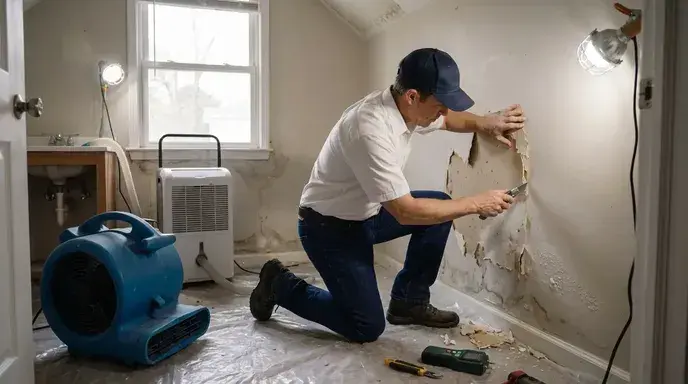
- Removes soaked drywall, insulation and carpet pad
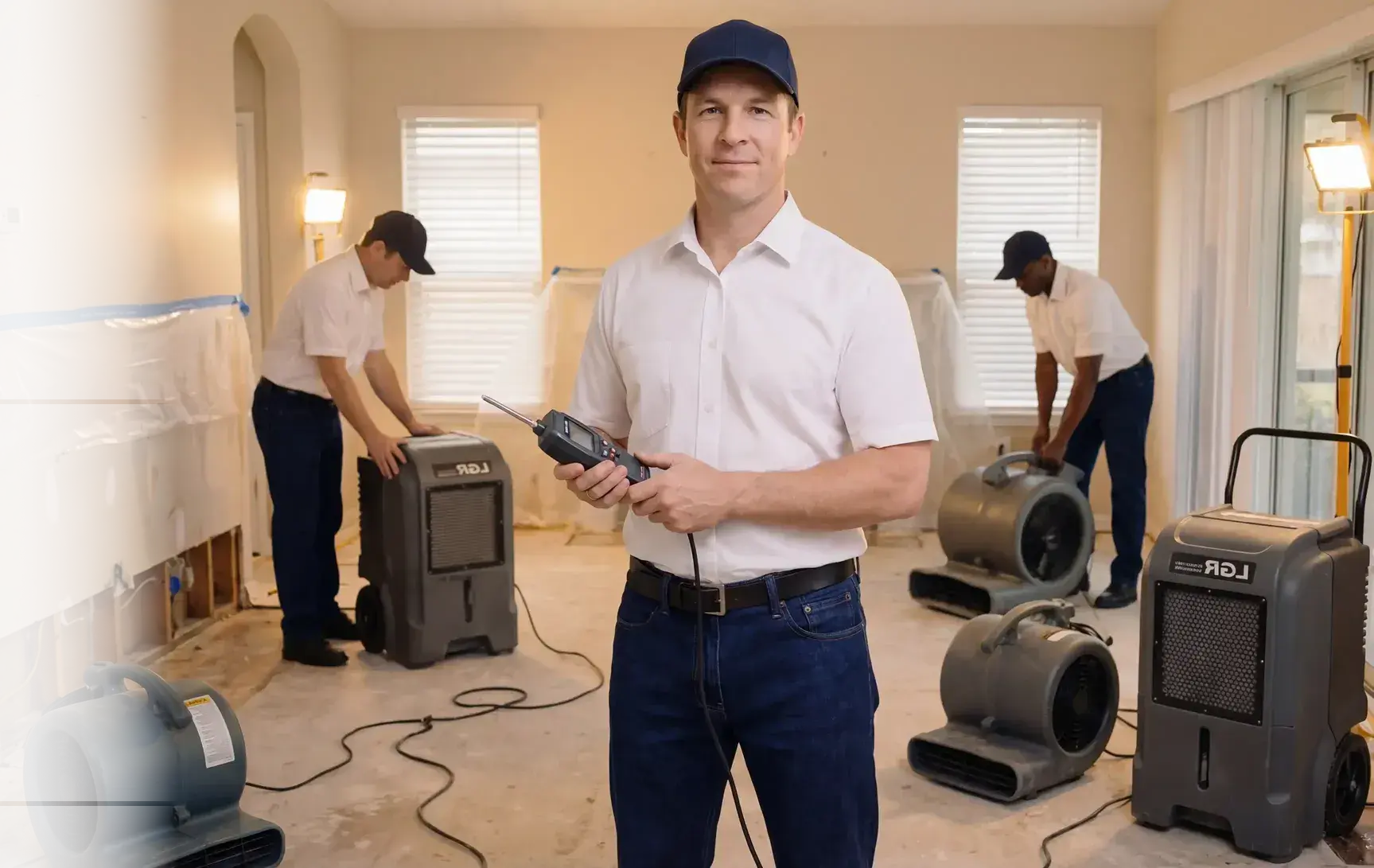
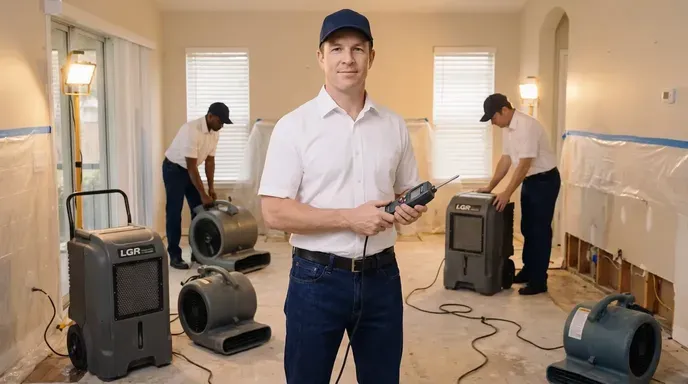
- Runs air movers and dehumidifiers with daily readings
- Repairs drywall, flooring and paint
Water damage: leaks, burst pipes and flooding
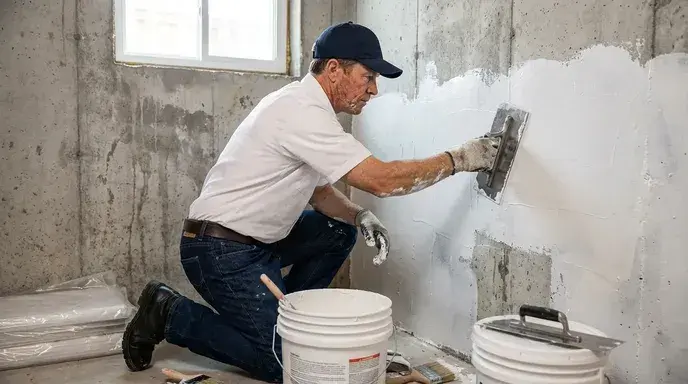
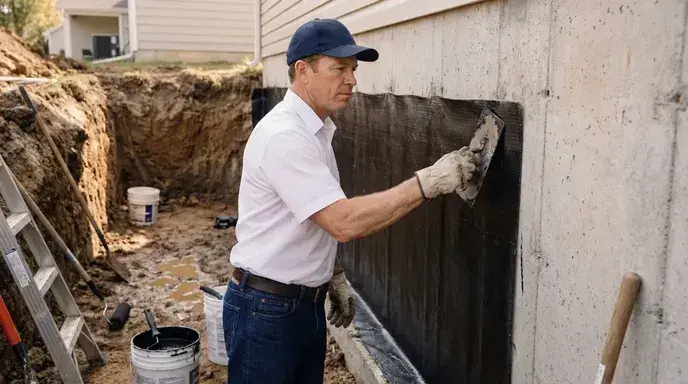
Clean water from a pipe, an appliance or a storm soaks into drywall, flooring and framing within hours, and mold can follow in a day or two. A water damage pro removes the water, dries the structure with air movers and dehumidifiers, and replaces what cannot be saved. See water damage restoration for what the work involves and what it costs.
- Burst or leaking pipes
- Appliance and water heater leaks
- Flooded basements
- Storm and roof leaks
- Wet drywall, carpet and flooring
Fire and smoke damage
After a fire, the damage you can see is only part of it. Soot is acidic and keeps staining and corroding surfaces, smoke odor settles into walls and ducts, and the water used to put the fire out has to be dried too. See fire damage restoration for the cleanup steps and typical costs.
- Kitchen and electrical fires
- Soot on walls and ceilings
- Smoke odor in rooms and ducts
- Water left from firefighting
- Charred framing and drywall
Sewage backups and overflows
Water that contains sewage is a health hazard, so it is handled differently from a clean water leak. The area is closed off, contaminated materials are removed and bagged, and everything left is sanitized before drying. See sewage cleanup for what to do first and what the cleanup covers.
- Sewer line backups
- Toilet overflows with waste
- Basement floor drain backups
- Contaminated carpet and drywall
- Sanitizing after the cleanup
Mold after a moisture problem
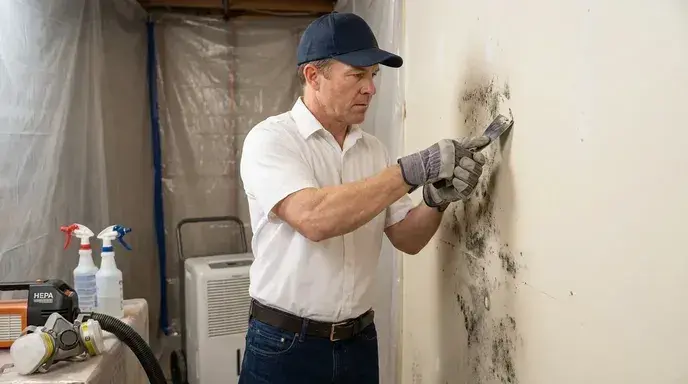
Mold needs moisture, so it usually appears after a leak, a flood or long-term damp. Removing it properly means finding and fixing the moisture source, containing the area so spores do not spread, and removing affected materials. See mold remediation for the process and when a small patch is safe to clean yourself.
- Visible mold on walls or ceilings
- Musty smell with no clear source
- Mold after a leak or flood
- Damp basements and crawl spaces
- Mold in attics and bathrooms
Will homeowners insurance pay for restoration?
It depends on what caused the damage, and every policy is different. As a general guide for homeowners in Fort Worth: sudden, accidental damage is usually covered, some causes need extra cover added to the policy, and damage from slow, ongoing problems is usually excluded. Check your policy or ask your insurer before work starts. Our guides explain coverage for water damage, flood damage and mold.
- Usually covered: burst pipes and sudden appliance leaks
- Usually covered: fire and smoke damage
- Needs added cover on most policies: sewer or drain backup
- Needs a separate flood policy: flooding from outside the home
- Often limited: mold, usually only after a covered water loss
- Usually excluded: slow leaks, wear and lack of maintenance
Call us 24/7
Call and describe what happened: flooding, smoke damage, a sewage backup or mold. We match you with a local restoration company that handles that kind of damage.
Get an assessment
The restoration pro inspects the affected areas, explains what needs to be done and gives you an estimate before any work begins.
Approve the work
If you go ahead, the company cleans, dries and repairs the damaged areas. You pay the company directly, and only for work you approve.
Connect with local restoration specialists available in Fort Worth today.
Call Us Now